How to Choose an Orthodontist in Milwaukee: 5 Things to Check Before You Book
Most Milwaukee families spend more time researching a new restaurant than choosing their orthodontist. That’s understandable, every practice website looks roughly the same. “Friendly staff. Flexible payment plans. Free consultation.” After a while, it all blurs together.
But the differences between orthodontists are real, and they matter. The technology your provider uses directly affects how comfortable your treatment is, how precise your results are, and how long you’re in braces or aligners. Choosing the wrong practice doesn’t just waste money — it costs time you won’t get back.
This guide gives you exactly what to look for before you book — including the questions most patients never think to ask.
1. What Technology Does Your Milwaukee Orthodontist Use?
A decade ago, every orthodontist used roughly the same tools. That’s no longer true.
Practices investing in advanced technology can offer treatment that is faster, more comfortable, and more precise than what was possible even five years ago. Practices that haven’t updated their systems are still delivering care the same way they did in 2010.
The two technologies worth asking about specifically:

LightForce Braces are custom 3D-printed ceramic brackets made specifically for your teeth — not off-the-shelf hardware applied to everyone. Because each bracket is designed around your exact tooth anatomy, forces are more precisely applied. That means fewer adjustment visits and, for many patients, shorter overall treatment time. Most orthodontists in the Milwaukee area don’t offer LightForce. It’s worth asking directly.
KLOwen Custom Braces take a similar approach — completely custom wire and bracket systems built from a digital scan of your mouth. Again, the goal is precision: treatment that fits your teeth exactly, rather than a standardized solution adapted to them.

If a practice can’t tell you about the technology behind their braces, that’s a meaningful data point. Griffin Orthodontics is one of the only practices offering LightForce braces in Milwaukee — ask any provider you’re considering whether they’re a certified partner.
2. What Clear Aligners Are Available in Milwaukee?
Most people hear “clear aligners” and think Invisalign. Invisalign is the best-known brand, but it isn’t the only option — and for many patients, it isn’t the best one.
Spark Clear Aligners in Milwaukee are available through a small number of certified practices. They use a different materia(TruGEN) that resists staining better and is designed to maintain tighter contact with teeth throughout treatment. The result is more consistent force delivery, which translates to more predictable outcomes.
When you’re evaluating orthodontists, ask specifically:
- Which aligner system do you use?
- Are you a certified Spark provider?
- What are the differences between your aligner options and Invisalign?
A practice that only offers one option — especially if that option is the most expensive branded one — may not be prioritizing your best outcome. A practice that offers multiple systems and can explain the clinical differences between them is a different kind of provider.
3. How to Tell If an Orthodontist Will Actually Customize Your Treatment
“Personalized care” appears on every orthodontist’s website. It means very little without specifics.
Personalized treatment in orthodontics means your provider starts from a digital model of your teeth — not a generalized treatment plan applied to your case. Ask: Do you use digital scanning or traditional impression molds?
Digital scanning (iTero and similar technology) creates a precise 3D map of your mouth in minutes. It’s more comfortable, more accurate, and gives your orthodontist better data to plan treatment. Practices still using physical impression molds are working from less precise data.
The right answer also shows up in the consultation itself. A provider offering personalized care will walk you through what your teeth need, what they don’t need, and why they’re recommending a specific treatment path. If the consultation feels like a sales pitch rather than a clinical conversation, trust that instinct.
4. How to Verify Your Orthodontist’s Credentials and Training
Not everyone who calls themselves an orthodontist in Wisconsin has completed the same level of training. A general dentist can legally perform orthodontic treatment. A specialist orthodontist has completed an additional 2–3 years of accredited residency training beyond dental school — training focused exclusively on tooth movement and jaw development.
Look for:
- Board-certified orthodontist — certified by the American Board of Orthodontics, which requires passing both written and clinical examinations beyond residency
- American Association of Orthodontists member — the professional standard for practicing specialists
- Documented experience with the specific treatment you’re considering
For complex cases, or for children and teens where early intervention decisions have long-term implications, this distinction matters significantly.
5. Use the Free Consultation to Test the Practice, Not Just Learn About Treatment
Most Milwaukee orthodontists offer a free consultation. Most patients treat it as a formality before committing to a plan. Flip that. The consultation is your best chance to evaluate whether this practice is right for you before you’ve spent a dollar. Use it to ask:
- “What treatment would you recommend, and what would you recommend against?” A confident provider will tell you what you don’t need as readily as what you do.
- “What does a typical treatment timeline look like for my case?”
- Vague answers here are a red flag.
- “What happens if treatment takes longer than planned?”
- Policies vary.
- “Do you accept my insurance, and what would my out-of-pocket cost look like?”
- Get this in writing, not just verbally.
The answers tell you about the treatment. How they answer tells you about the practice.
The Milwaukee Orthodontist Checklist: What Good Looks Like
To summarize: the right orthodontist for you uses current technology (ask about LightForce, KLOwen, and Spark), works from precise digital scans rather than guesswork, holds specialist credentials, and gives you a consultation that feels like a clinical conversation — not a close.


These standards exist at the high end of what the Milwaukee market offers. They’re not universal. That’s exactly why asking the right questions before you book makes the difference between a smooth, successful treatment and two years of frustrating adjustments.
Ready to See What Your Smile Needs?
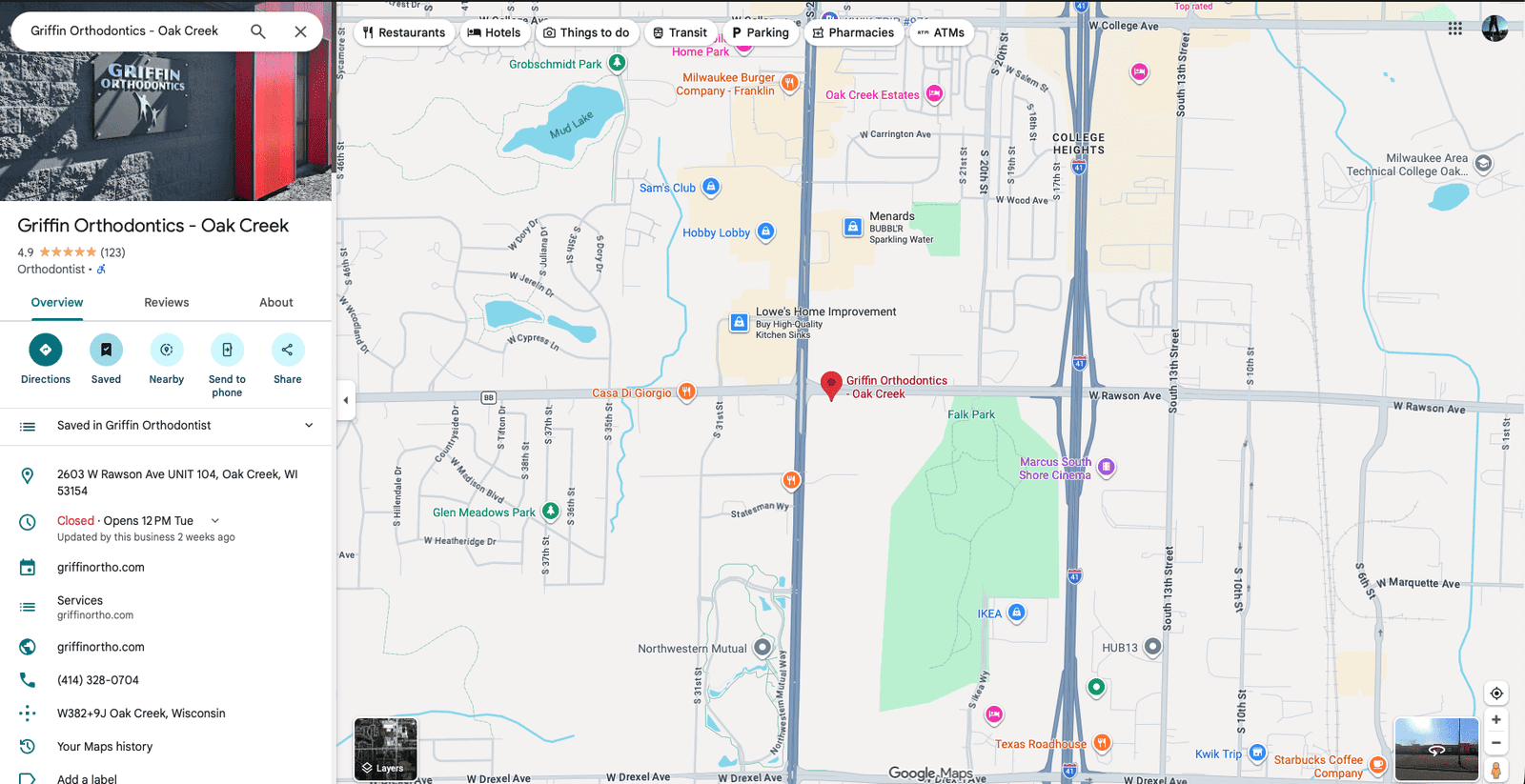
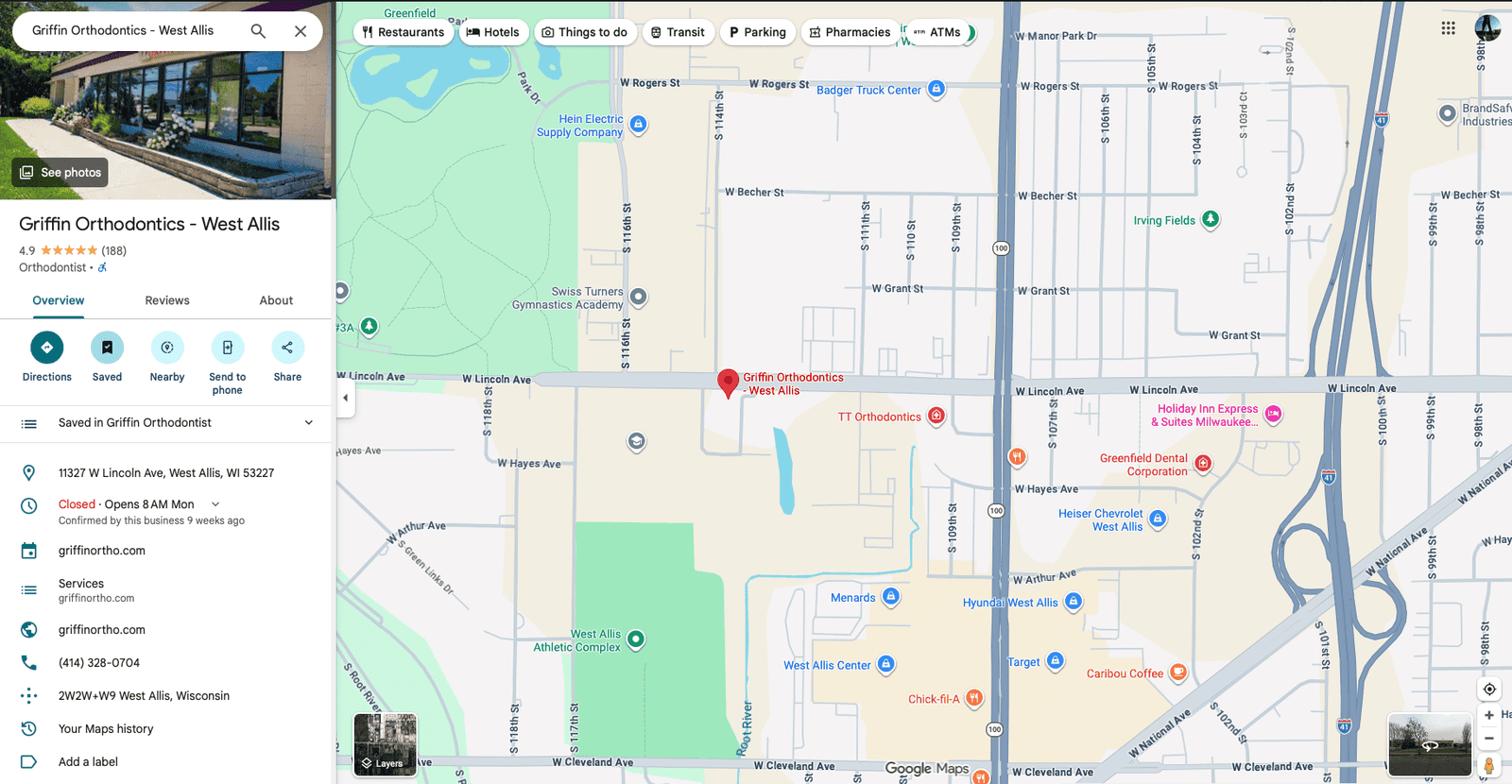
Griffin Orthodontics offers free exams at our Oak Creek and West Allis locations. Dr. Griffin is a board-certified orthodontist and one of the few Milwaukee-area providers offering LightForce, KLOwen, and Spark Clear Aligners. Your exam includes a 3D digital scan, a clear explanation of your options, and a personalized treatment recommendation — with zero pressure to decide anything on the spot.
How do I know if I need an orthodontist or a regular dentist?
If you’re looking to straighten teeth, correct a bite issue, or address spacing or crowding, you need an orthodontist — not a general dentist. Orthodontists complete 2–3 years of specialty residency training beyond dental school, focused exclusively on tooth movement and jaw alignment. A general dentist can legally perform orthodontic treatment in Wisconsin, but a board-certified orthodontist has significantly more training in exactly this area. At Griffin Orthodontics, Dr. Griffin is a board-certified specialist and member of the American Association of Orthodontists.
How long does orthodontic treatment take in Milwaukee?
Most patients complete treatment in 12–24 months, though the timeline depends on the complexity of your case and the technology used. Practices using custom-bracket systems like LightForce — where each bracket is 3D-printed to fit your exact tooth anatomy — often achieve faster results than traditional off-the-shelf braces because force is applied more precisely from the start. The best way to get an accurate estimate for your specific case is a free exam with a board-certified orthodontist.
What is the difference between Invisalign and Spark Clear Aligners?
Both are clear aligner systems that straighten teeth without metal braces, but they use different materials. Spark Aligners are made from TruGEN crystal, which resists staining better than Invisalign’s SmartTrack plastic and is designed to maintain tighter contact with teeth throughout treatment — leading to more consistent results. Griffin Orthodontics is a certified Spark provider. We’ll recommend the right aligner system for your specific teeth and lifestyle at your free exam.
Does Griffin Orthodontics accept insurance?
Yes. We accept most major dental insurance plans and will verify your benefits before your appointment so you know exactly what your out-of-pocket cost will be. We also offer flexible monthly payment plans to make treatment accessible regardless of insurance coverage. Call us at (414)-328-0704 or request your free exam online and we’ll handle the insurance check for you.